





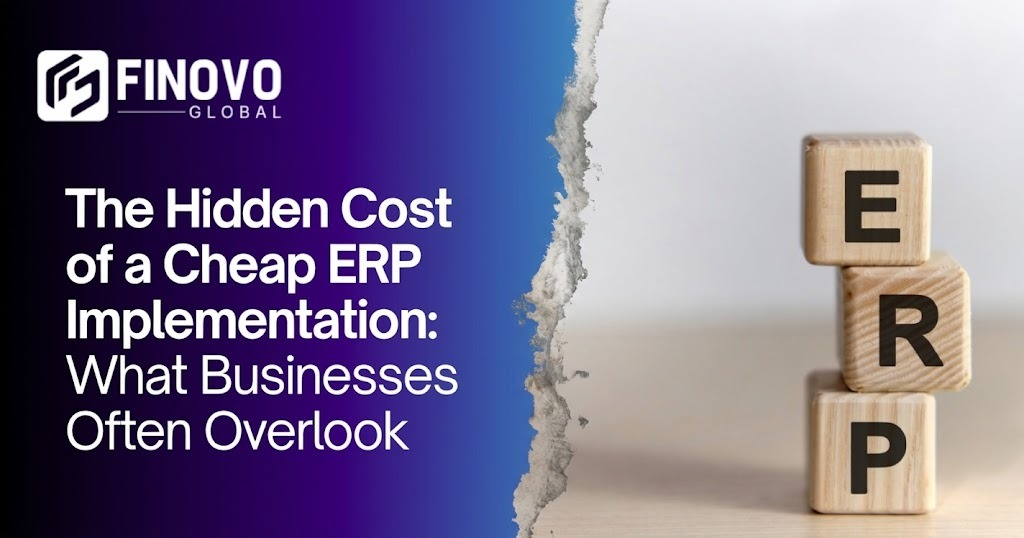
The Hidden Cost of a Cheap ERP Implementation: What Businesses Often Overlook
Why the lowest ERP implementation quote can lead to unexpected expenses, operational challenges, and higher long-term costs, and what businesses can do to avoid them.
A lower implementation quote might save you money today. But what happens when it starts costing you more tomorrow?
Imagine choosing an ERP implementation partner who promises everything you need at half the price of other providers.
Sounds like a great deal, right?
Six months later, your employees are struggling with the system, reports aren't matching, and you're paying extra for features you thought were already included.
Suddenly, that affordable ERP implementation doesn't look so affordable anymore.
This is something businesses need to think about before making an ERP investment. Because the real cost of ERP isn't just what you pay to implement it. It's what you spend making it work for your business.
1. The Cheapest Quote Doesn't Always Include Everything
When comparing ERP implementation proposals, it's easy to focus on the final number.
But have you checked what's actually included?
One provider might quote for basic software configuration, while another includes data migration, integrations, testing, training, and ongoing support.
The difference matters.
A cheaper proposal may leave essential services outside the original scope, turning them into additional charges later.
Before signing, ask: Does this quote cover everything required to get our business fully operational?
A transparent breakdown is far more valuable than an attractive price without clear deliverables.
2. Poor Data Migration Can Become an Expensive Problem
Your ERP is only as reliable as the information inside it.
Imagine transferring years of customer records, supplier details, inventory figures, and financial transactions into a new system without properly cleaning or verifying them.
Duplicate customers appear. Inventory balances don't match. Finance teams spend hours correcting mistakes.
Instead of improving efficiency, the new ERP creates additional work.
Proper data migration involves cleaning, mapping, testing, and validating information before going live.
Skipping these steps might reduce initial implementation costs, but correcting inaccurate data afterward can become far more expensive.
3. Too Much Customization Creates Long-Term Costs
Every business has unique requirements, but does every requirement need a custom feature?
Not necessarily.
One common mistake is customizing an ERP system to replicate every existing workflow, even when simpler built-in functionality could achieve the same result.
Excessive customization increases development costs and can make future upgrades more complicated.
With platforms like Odoo ERP, businesses should first explore standard features and configuration options before investing in custom development.
The goal isn't to make your ERP complicated. It's to make your operations simpler.
Customize where it adds genuine business value, not simply because something has always been done a particular way.
4. Employee Training Isn't an Optional Expense
You can implement an excellent ERP system, but what happens if your employees don't know how to use it?
They return to spreadsheets, rely on manual workarounds, and avoid features they don't understand.
Sound familiar?
This is why employee training deserves a proper place in your implementation budget.
Your finance team, sales department, warehouse staff, and management may all interact with the ERP differently.
Each needs relevant, practical training.
A successful implementation isn't measured only by whether the system goes live.
It's measured by whether your people can use it confidently afterward.
5. The Real Expenses Often Begin After Go-Live
Many businesses treat ERP implementation as a one-time project.
But going live is just the beginning.
Your business will evolve. Processes will change. New employees will join. Additional integrations or system improvements may become necessary.
Without a clear support and maintenance plan, even minor issues can interrupt daily operations.
Before choosing an implementation partner, understand what happens after deployment.
Who handles technical problems? How are upgrades managed? What support is included, and what costs extra?
These questions can save considerable frustration later.
How Can Businesses Avoid These Hidden Costs?
The answer isn't necessarily choosing the most expensive ERP provider.
It's choosing the right implementation approach.
Start by documenting your business requirements, identifying essential integrations, and understanding what your teams actually need.
Compare proposals based on deliverables rather than price alone.
Plan for data migration, employee training, testing, and post-implementation support.
Most importantly, work with a partner who understands your business processes, not just the software.
Build an ERP That Delivers Value, Not Unexpected Costs
At Finovo Global, we believe ERP implementation should make your business more efficient, not introduce unnecessary complexity.
Our team helps businesses implement and customize Odoo ERP, connecting finance, sales, purchasing, inventory, and other essential operations through solutions designed around their actual requirements.
From understanding your workflows and planning implementation to system configuration, customization, integrations, and ongoing support, we focus on helping you make informed technology investments.
Considering Odoo ERP for your business?
Contact Finovo Global to discuss your requirements, explore the right implementation approach, and understand how to avoid unnecessary costs before your project begins.
Let's build an ERP solution that makes business sense today and continues delivering value tomorrow.
More Insights
View All